

Blog
How to Choose the Right Rug Size

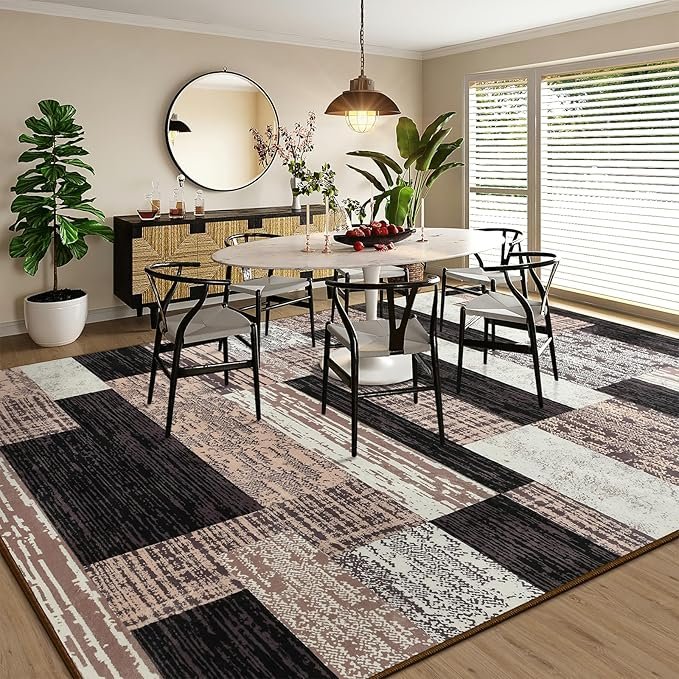

There are many different rug sizes available, but how do you know which size will fit your space? Finding the correct rug dimensions relies on the size of the room and the arrangement of furniture. Follow the steps below to ensure you choose the correct rug size for your needs.
Step 1: Choose the Best Rug Placement

Add Your Heading Text Here
The size of your space and the layout of your furniture will help you determine how large your rug should be. Consult the rug size chart above and use the detailed rug placement diagrams below to help you decide which rug size will achieve the right amount of floor coverage. The right rug size depends on the room: 8′ x 10′ for medium living rooms, 9′ x 12′ for large living rooms, 5′ x 8′ under a dining table for four chairs, and 8′ x 10′ for a queen bed.
Entryway Rug Placement

For entryways, you should use the shape of the space to help dictate the proper size and shape of the rug. Large foyers can benefit from square, rectangular, or round rug sizes to help fill the space, while runner rugs are better suited for narrow entryways. Check the pile height to ensure your door will clear the rug when it’s opened.
Living Room Rug Placement

Your living room shape, not just the furniture, should dictate the rug size and orientation to make the space look larger and feel connected. There are three main layouts: all furniture legs resting on the rug, just the front legs on the rug, or all furniture – except for the coffee table – off the rug. If you choose a layout with the sofa on the rug, the rug should extend at least 6″ on each side for proper scale. Learn more about these layouts below.
- All Legs on the Rug: This layout, which requires the largest rug, is the best choice for anchoring a living room within an open-concept space or for any furniture grouping that floats (has no furniture against a wall). Placing all furniture on the rug will unify the pieces and create a defined seating area.
- Front Legs on the Rug: This versatile option works especially well when one edge of the furniture grouping is against a wall. (You don’t need to pay for a rug to cover a spot no one sees!) For a cohesive look, choose a rug size that allows for only the front legs of every piece of furniture in the grouping to be on the rug.
- Only a Coffee Table on the Rug: Perfect for small or narrow spaces, this layout plays off the room’s scale to make it feel larger. To get the proportions right, base the rug size on the interior dimensions of your seating area – and not just the coffee table – so it fills the negative space created by your furniture grouping.
Kitchen Rug Placement

Wanting to add a rug to your kitchen? Here are a couple rug options and size tips for this space.
- Runner: A well-placed runner can visually extend the space, whether you have a galley kitchen or a large kitchen island. Choose a runner that leaves at least a few inches of space on all four of the edges.
- Rug in Front of Sink: For U-shaped kitchen layouts, a small rug in front of the sink centers the space nicely. Use the width of your sink to help determine a proportionate rug size. Kitchen mats are often designed specifically for this spot, sporting features like nonslip backings to keep the mat in place or anti-fatigue support that can help alleviate pressure on your joints.
Dining Room Rug Placement

When deciding on a rug size for a dining room, the size of the room and the shape and size of the dining furniture should be taken into consideration.
- All Legs on the Rug: We recommend sticking with the “all legs on the rug” layout for this room. The rug should extend at least 24″, and no more than 36″, beyond all sides of the table, so chairs can sit on a flat surface, even when they are pushed back. Don’t forget to account for extendable leaves if your table has them.
Tip!
Opt for a stain-resistant rug that anchors your dining space and stands up to spills.
Bedroom Rug Placement

As the focal point of the room, your bed should also be the base for rug placement. Not only will this further define space, but will also give your feet a soft spot to land each morning. A variety of bedroom rug sizes will work depending on the look you’re trying to achieve.
- All Legs on the Rug: This all-inclusive layout extends beyond the bed to its accompanying furniture, like nightstands or a bench – but does not include bedroom pieces along other walls, like dressers. We recommend having your bedroom rug extend at least 18″ – 24″ past the edge of your bed. If you can, do not allow the rug to encroach upon any main walkways.
- 2/3 Bed on the Rug: Frame your bed with this popular option, which doesn’t quite extend up to your nightstands, but still allows for 18″ – 24″ of room on the sides and past the foot of the bed. For a symmetrical finish, opt for an 8′ x 10′ rug for queen beds and a 9′ x 12′ for a king.
- Runners on Each Side: This flexible choice works for spaces and beds of all sizes – and is a great option if two sides of the bed sit against a wall. Scale matters for this look: The runner shouldn’t extend beyond the bed itself, but should be a bit wider than your nightstand.
Hallway Rug Placement

Runners are the go-to choice for hallways and corridors because of their narrow dimensions. To ensure a runner is narrow enough for your hallway, we recommend leaving at least 6″ of floor space visible on each side of the runner
Step 2: Measure the Space

Once you’ve decided on the location for a new rug and considered the room layout, it’s time to measure! Follow these steps to measure for a new rug.
1. Grab a Tape Measure & Notebook
We recommend recording the measurements so you can reference the dimensions when you’re ready to start shopping. Though the plastic measuring tapes will work fine, steel measuring tapes are better for measuring long and straight distances.
2. Consider Your Layout
It’s important to have an idea of how you want to arrange your furniture and the rug in the space so you know what to measure. Use the room-by-room layouts in the section above to see how the furniture would look in each setting.
3. Measure the Space
You can measure the entirety of the room or stick to the seating area. If the room has a more open-concept feel, it’s better to narrow in on specific zones (like a seating area or dining area).
- When measuring an entire room for an area rug, subtract 6″ from both the total length and total width measurements. This revised total will be the ideal rug size for the space, as it covers the majority of the floor without overlapping with the baseboards.
- For seating areas, we recommend adding an additional 12″ – 24″ to both the total length and total width measurement to frame the seating area nicely.
4. Note Possible Obstructions
Make sure to take note of anything that could prevent the rug from laying flat, such as vents or doors. For example, if your rug will be beneath any doors, make sure to measure the space between the floor and the bottom of the door. The pile height (thickness) of the area rug you choose should be shorter than the gap to ensure the door can open and close without catching on the rug.
Tip!
Looking for a specific size? We’ve gathered some of the most common rug sizes guaranteed to suit your space.
Step 3: Factor In Your Budget

Generally, the price of a rug is directly related to its size – with larger rugs being more expensive. When determining what size rug to get, it’s important to factor in your budget and how large you can afford to go. If you want to save money without sacrificing size, consider what other features you might compromise for a budget-friendly option.
- Construction: Machine-made rugs are less expensive than handmade rugs due to the amount of labor that goes into them. To save money, look for rugs made with machine-woven techniques including tufted, loomed, braided, or flatweave.
- Material: Rugs made of synthetic materials are more budget-friendly than those made of premium and natural materials. Opt for synthetic options like polyester and polypropylene rather than natural cotton, wool, or cowhide to save money on a large area rug.
- Durability: Especially durable rugs like performance and high-traffic rugs tend to be more expensive because of their high-quality make. Keep in mind, however, that low-quality area rugs will likely need to be replaced more often as they begin to show wear-and-tear, so it may be worth investing in a more durable rug upfront.
Step 4: Review These Sizing Tips & Considerations

Here are some additional tips to keep in mind when shopping for the ideal rug size.
- Bigger Is Better: A few inches can make all the difference between the rug pulling the room together or making it feel disjointed. Opting for the larger option, especially if you’re choosing between sizes, will prove that it is worth the extra expense every time.
- Read the Room: When choosing a rug size and orientation, make sure it is proportional to the space (large rooms = large rugs), and placed to echo its dimensions (long room = orient lengthwise).
- Visualize the Final Look: Use painter’s tape to mock the rug placement before you buy. This trade secret is an easy way to check that you have the right fit from every vantage point.
- Layer Up: If you’re working with a rug that is too small for your desired look, try layering a larger rug beneath to create a cozy, eclectic feel. Not only does this easy fix solve your sizing issue, it can be a great opportunity to amp up the visual interest.
Step 5: Pick a Compatible Rug Pad Size

When buying an area rug for your home, don’t forget a rug pad! A rug pad will help keep your rug from sliding around under your household’s foot traffic, provides extra cushion, and protects your floor from everyday wear and tear.
A good rule of thumb for choosing the right size rug pad is to leave 1″ of rug overhang on all sides of the rug pad. This means that the ideal rug pad for a rug will be 2″ shorter and narrower than the rug itself. For example, the perfect rug pad for a 5′ x 8′ rug is 4’10” x 7’10”.
Keep in mind that rug pads can easily be cut to size. If you can’t find a rug pad that perfectly suits the rug you’ve chosen, always size up – you can trim a rug pad to the right dimensions, but you can’t add length if it’s too small.
Frequently Asked Questions
What size rug for a queen bed?
An 8′ x 10′ rug works best under a queen bed, extending 18″ to 24″ past both sides and the foot of the bed for a comfortable layer underfoot and visually balanced look.
What size rug for a king bed?
A 9′ x 12′ rug is recommended for a king bed, providing proper coverage on all sides.
What size rug for a dining table with six chairs?
Use an 8′ x 10′ rug for a six-chair table so that the rug extends 24″ to 30″ on all sides and allows guests to comfortably push chairs away from the table.
What size rug for a small living room?
A 5′ x 7′ or 6′ x 9′ rug fits most small living rooms and allows you to place the front legs of your furniture on top of the rug.
Should rugs go under furniture?
Yes, place at least the front legs of sofas or chairs on the rug for a well-balanced look.